


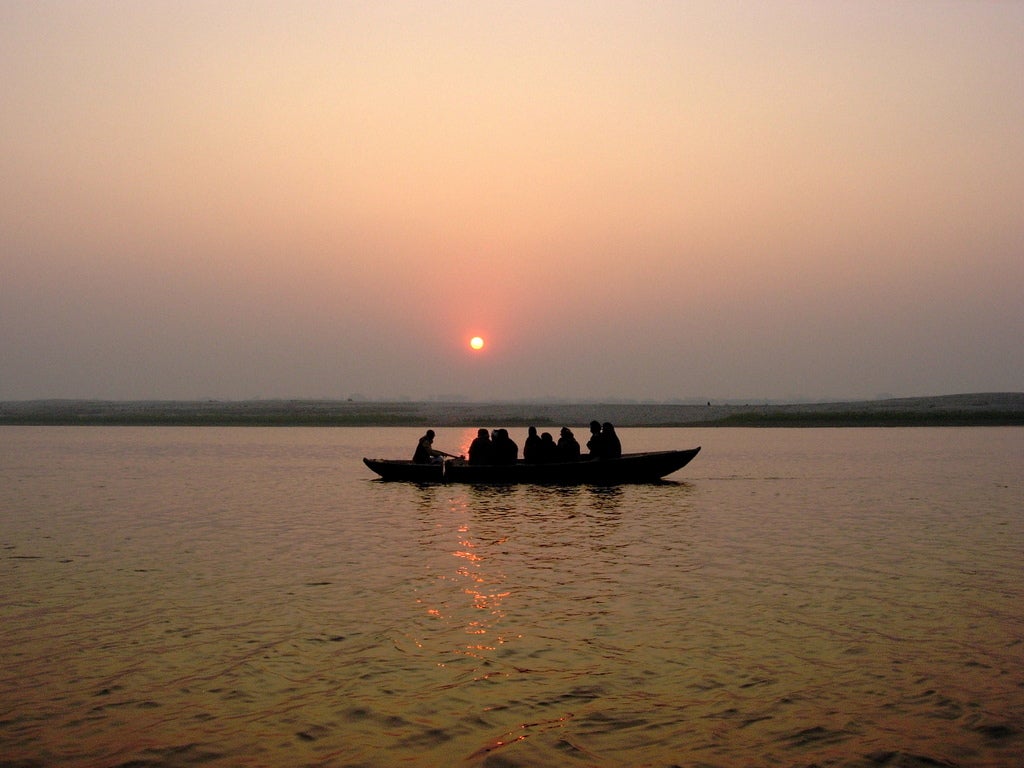

A team of Indian and British researchers examined the river Ganges, one of the most polluted in the world, and mapped the hotspots.
These areas are often found where a tributary joins the main river or where significant point sources of pollution exist. Natural processes and anthropogenic factors are putting more and more stress on the water quality of rivers.
Pollutants can move at different speeds and accumulate in varying quantities along rivers and this complex “cocktail” of chemicals is constantly changing and making its way to the ocean.
These tipping points can change the behavior of some compounds, causing the chemicals to concentrate depending on where they are on their journey down the river.
This new research approach pioneered on the Ganges can be applied to other large river systems around the world. In this way, it is possible to change the approach of the global challenge to tackle water pollution. According to these studies, multiple contaminant sources interacting with each other must be considered.
The results of the field research: “A Systematic Approach to Understand Hydrogeochemical Dynamics in Large River Systems: Development and Application to the River Ganges (Ganga) in India” were published in Water Research.
These studies reveal that chemicals – including nitrate, chloride, sulfate, calcium, sodium, and strontium – are diluted or concentrated in varying proportions at a number of critical points along the Ganges.
«Large river systems, such as the Ganges, provide crucial water resources with important implications for global water, food, and energy security. Understanding the complex dynamics of such systems is a great challenge. The critical points that we have identified in India change the behavior of some compounds, altering the composition of the cocktail of chemicals that flows along the Ganges towards the ocean. The analysis of these critical points could lead to a turning point in the understanding of how pollutants travel along major waterways, allowing us to study how to better address this global challenge “, explains Stefan Krause, professor of ecohydrology and biogeochemistry at the University of Birmingham.


Show Comments