


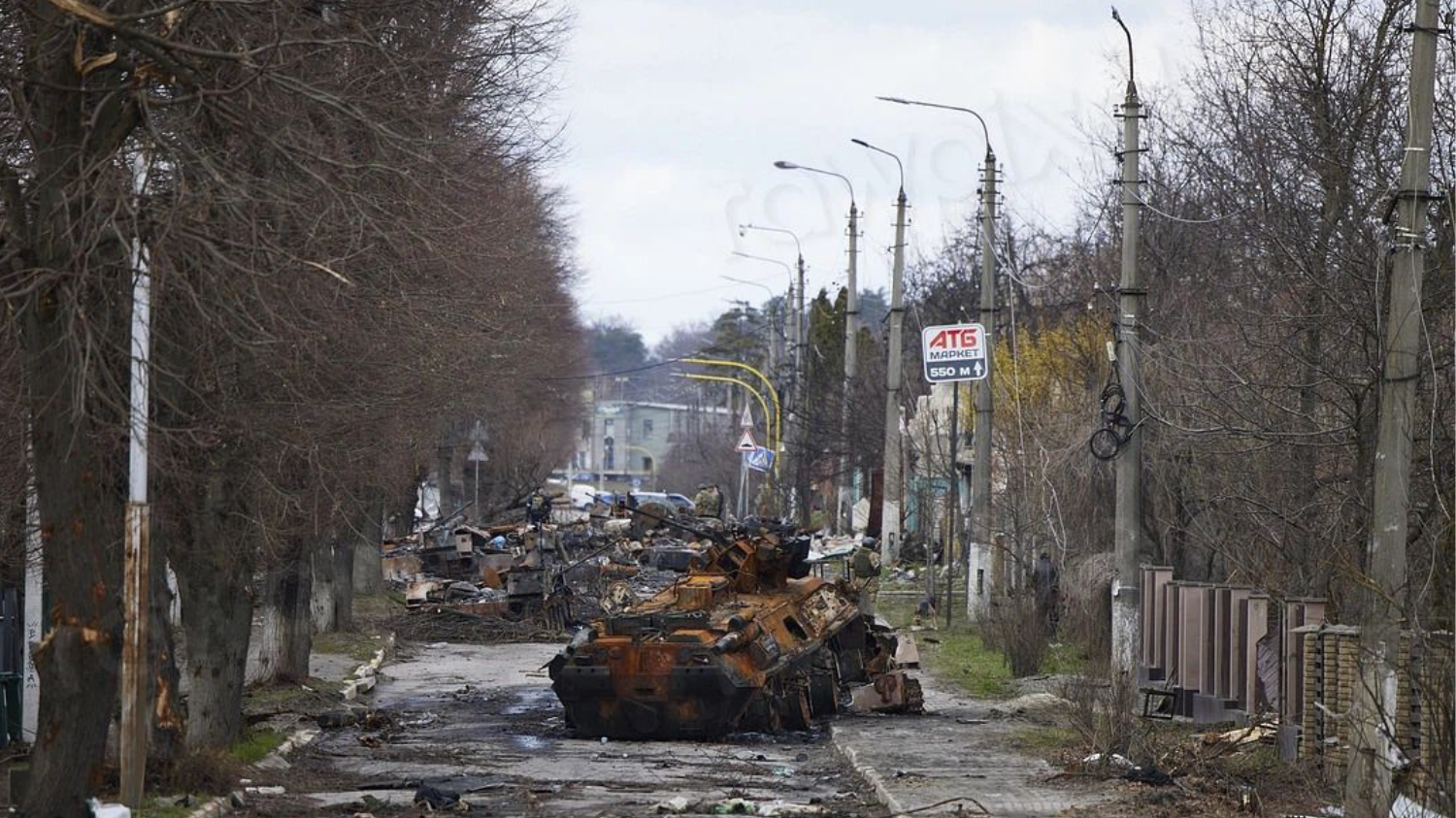

Ukraine seeks nearly $44 billion in damages from Russia for emissions caused by the ongoing war. This marks the first time a country has sought to recover damages for increased emissions caused by conflict. Pavlo Kartashov, deputy minister for economy, environment, and agriculture, told Reuters at COP 30 that “a lot of damage was caused to water, land, and forests”, and noted, “We have huge amounts of additional CO 2 emissions and greenhouse gases.”
Rising emissions since the invasion
Since Russia’s invasion in February 2022, Ukraine’s emissions have increased by over 230 million tonnes of CO2 equivalent- roughly matching the combined annual emissions of Austria, Hungary, the Czech Republic, and Slovakia, according to a February report by the Initiative on GHG Accounting of War. Doug Weir of the Conflict and Environment Observatory highlights that “Armed conflicts cause a huge range of direct and indirect harms to the environment, many of which can persist for years“. Ukraine has used climate conferences to emphasise the environmental impact of the war and plans to submit a claim through a new compensation process established by the Council of Europe.
Legal pathways and war crime investigations
All claims, from companies or individuals, will be assessed by a commission, though the source of funding for approved claims remains unclear. Initially, Ukraine aimed to use international law to hold Russia accountable for environmental damages and hoped to file a claim in international courts after the war ended. However, ongoing conflict has led Ukrainian prosecutors to investigate 247 environmental war crime cases against Russia, bringing some into Ukrainian courts and the International Criminal Court, according to the New York Times. Emissions in Ukraine have risen sharply due to warfare activities, including the use of tanks, fighter jets, and artillery. Explosive devices also pollute soil, water, and plant life with toxic substances. Explosions destroy buildings, generate debris, release hazardous materials such as asbestos, and harm water supplies and sanitation systems.
Forest fires and infrastructure destruction
The war has caused numerous forest fires, increasing emissions by 113%, according to the Initiative on GHG Accounting of War. Rebuilding efforts and energy infrastructure destruction have further boosted emission levels. Professor Jerome Dumortier stated that “In the case of war, you always have heavy use of machinery, like tanks, that are very carbon intensive in terms of the fuel they use“.




Show Comments