
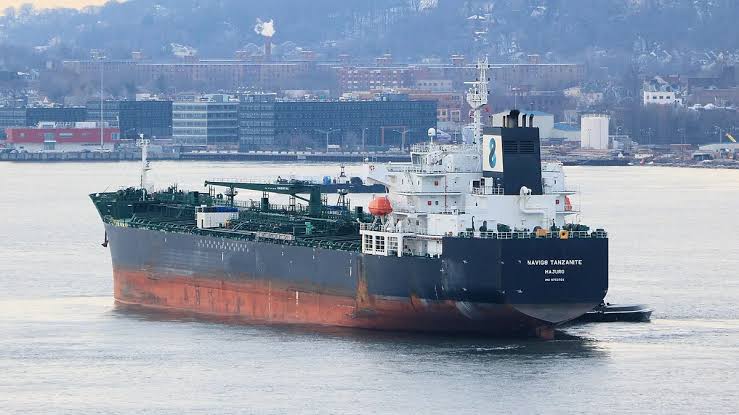
Brent remains above $100 a barrel as Middle East disruptions, depleted inventories and costly shipping reshape the oil market. The current crisis is increasingly about moving and refining crude, not simply producing it.
Oil prices remain under intense pressure at the end of September, with Brent crude still trading above $100 a barrel despite a fresh decline in Tuesday’s session.
Brent futures fell to around $103.32 a barrel on 29 September, while US West Texas Intermediate slipped to approximately $90.65. Yet the monthly picture tells a different story: Brent remains on course for a gain of roughly 14% in September, reflecting how deeply geopolitical and logistical risks continue to affect the global energy system.
What is emerging is not simply another conventional oil shock driven by insufficient production.
Increasingly, the decisive question is whether crude and refined products can move efficiently from producing regions to consuming markets.
Oil supply is recovering, but logistics remain fragile
Some Middle Eastern crude exports have improved in recent weeks. Higher flows from Saudi Arabia and the United Arab Emirates, together with the return of Saudi Arabia’s East-West Pipeline, have helped increase regional exports.
According to Reuters, Middle Eastern crude volumes reached around 12.8 million barrels per day in September, their highest level since February.
That recovery, however, has not removed the structural pressure on the market.
A significant portion of trade is still being rerouted or handled through more complex ship-to-ship transfers. These operations increase transport times and costs and reduce the efficiency of the global oil supply chain.
The International Energy Agency has highlighted the same problem. In its September Oil Market Report, the agency estimated that global oil production fell by 1.6 million barrels per day in August, to 100.1 million barrels per day, as more than 10 million barrels per day of Gulf output remained shut in or constrained by security risks.
The result is a market in which nominal production capacity tells only part of the story.
A barrel that cannot easily reach a refinery, or a refined product that cannot reach its final market, is economically very different from one moving through a normal and predictable supply chain.
Refining has become another source of pressure
The stress is particularly visible in refined products.
The IEA estimates that global refinery throughputs reached 81.4 million barrels per day in August, but remained 4.2 million barrels per day below the level recorded a year earlier. Refining margins in the Atlantic Basin climbed to record levels, supported especially by exceptionally strong diesel cracks.
This matters because consumers do not buy crude oil.
They buy petrol, diesel, jet fuel and other refined products.
The relationship between the price of a barrel and the price paid by households or companies therefore depends heavily on refinery availability, transport costs, inventories and regional supply imbalances.
That helps explain why fuel prices can remain elevated even when crude prices temporarily retreat.
European fuel markets have already experienced this phenomenon during 2026. Refinery disruptions and attacks on energy infrastructure have reduced the availability of diesel and other middle distillates, pushing refining profits and wholesale product prices sharply higher.
Inventories are becoming increasingly important
Another element supporting prices is the rapid decline in global oil inventories.
The IEA estimates that observed oil stocks fell by another 95 million barrels in August, bringing cumulative reductions since February to more than 500 million barrels.
Oil stored at sea also declined as tanker traffic from the Middle East faced repeated disruptions.
Inventories normally act as a shock absorber.
When production is interrupted or transport becomes difficult, refiners and consumers can draw on existing stocks. But as those buffers shrink, markets become more sensitive to new disruptions.
This creates an increasingly volatile environment in which relatively small changes in supply routes or refinery output can have a disproportionate effect on prices.
The IEA warned in September that if Gulf supplies remain constrained and commercial inventories continue to fall, further price increases — or weaker demand — may ultimately be needed to rebalance the market.
OPEC+ keeps production policy unchanged
Against this backdrop, OPEC+ has so far avoided another major change in production policy.
Saudi Arabia, Russia, Iraq, Kuwait, Kazakhstan, Algeria and Oman agreed in early September to maintain their existing production levels for October. The group is due to review market conditions again on 4 October.
That decision reflects the unusual nature of the current market.
Increasing production does not automatically solve bottlenecks created by insecure maritime routes, damaged refining capacity or higher freight costs.
The market therefore faces a paradox: additional barrels may exist, yet the energy system can still struggle to deliver enough usable fuel to the places where demand is concentrated.
The oil crisis is increasingly a transport crisis
The broader lesson from the current episode is that energy security can no longer be measured only in terms of production capacity.
Pipelines, ports, shipping lanes, refineries and strategic inventories have become just as important as oil fields themselves.
For Europe in particular, this represents a significant vulnerability.
The continent remains highly dependent on imported crude and refined products, while simultaneously trying to reduce fossil fuel consumption and accelerate electrification.
That transition may eventually reduce exposure to global oil shocks. In the short term, however, transport, industry and aviation remain deeply dependent on liquid fuels.
The current rise in oil prices therefore provides another reminder that the energy transition and energy security cannot be treated as separate questions.
A more diversified energy system may reduce long-term dependence on oil. But until that transformation is complete, the resilience of the existing oil supply chain — from tanker routes to refinery capacity — will remain a critical part of Europe’s economic and energy security.