
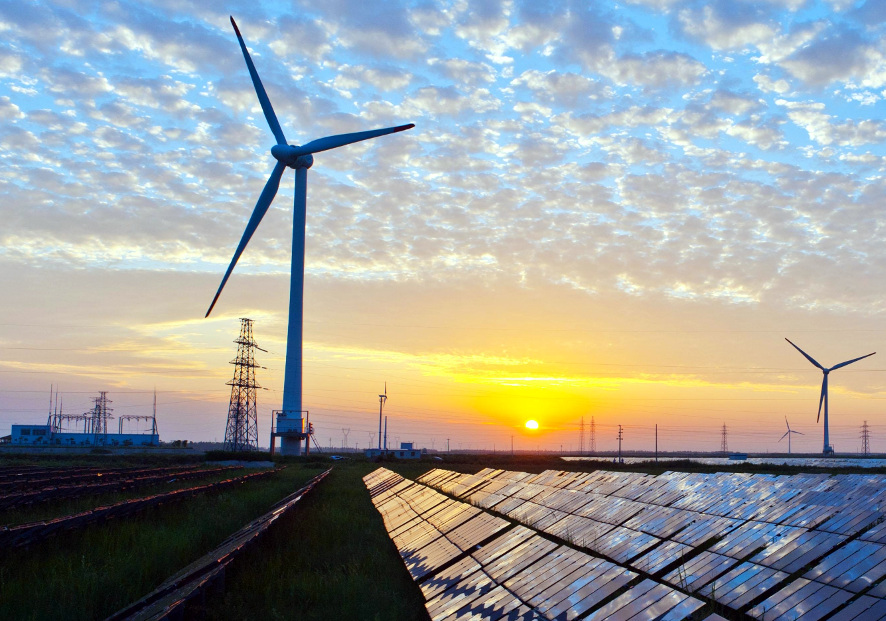
For the first time in history, solar and wind farms have generated more electricity than coal plants, marking a pivotal moment in the global energy transition. According to research from the climate think tank Ember, renewable energy has kept pace with growing electricity demand in the first half of 2025, while coal and gas use declined slightly.
Solar and wind expansion fueled by Asia
Ember’s report highlights that global solar generation surged compared with the same period in 2024, accounting for the majority of the increase in electricity demand. Wind power also grew steadily, collectively allowing renewables to displace fossil fuels for the first time. “Solar and wind are now growing fast enough to meet the world’s growing appetite for electricity”, said Małgorzata Wiatros-Motyka, senior electricity analyst at Ember. “This marks the beginning of a shift where clean power is keeping pace with demand growth”.
China and India were the primary drivers of this expansion. In China, renewable capacity additions exceeded the rest of the world combined, resulting in a 2% drop in fossil fuel generation compared with the first half of 2024. India, with slower electricity demand growth and significant new renewable capacity, also cut back on coal and gas use.
By contrast, developed nations experienced mixed results. In the US, electricity demand outpaced renewable growth, increasing reliance on coal. Europe saw modest demand growth, but weak wind and hydro output led to higher coal and gas generation.
Different results in developed nations and a global solar boom
The International Energy Agency (IEA) projects that global renewable capacity could more than double by the end of the decade, with solar power with solar power accounting for 80% of new additions. China and India are expected to remain the largest growth markets, while countries such as Saudi Arabia, Pakistan, and several Southeast Asian nations are poised for rapid solar development.
Lower-income countries are increasingly driving the solar boom, benefiting from dramatic reductions in cost. Pakistan, for example, imported enough solar panels in 2024 to significantly increase its electricity capacity, while African nations including South Africa and Nigeria have also seen strong growth in solar installations.
However, rapid solar adoption brings challenges. In Afghanistan, widespread use of solar-powered water pumps is lowering the water table, threatening long-term access to groundwater.
Turning point in the energy transition
Global “sun belt” and “wind belt” nations face different energy realities. Sun belt countries in Asia, Africa, and Latin America can reduce energy costs quickly by combining solar generation with affordable storage, while wind belt countries like the UK face higher costs and intermittency challenges, requiring extensive backup systems.
China’s dominance in clean technology remains unmatched. In August 2025, the country’s clean tech exports hit a record $20 billion, driven by a 26% increase in electric vehicle sales and a 23% rise in battery exports, which now surpass the value of its solar panel exports.
Despite regional differences in adoption, Ember calls 2025 a “crucial turning point”, marking the historic moment when clean energy begins to rival fossil fuels in meeting global electricity demand.